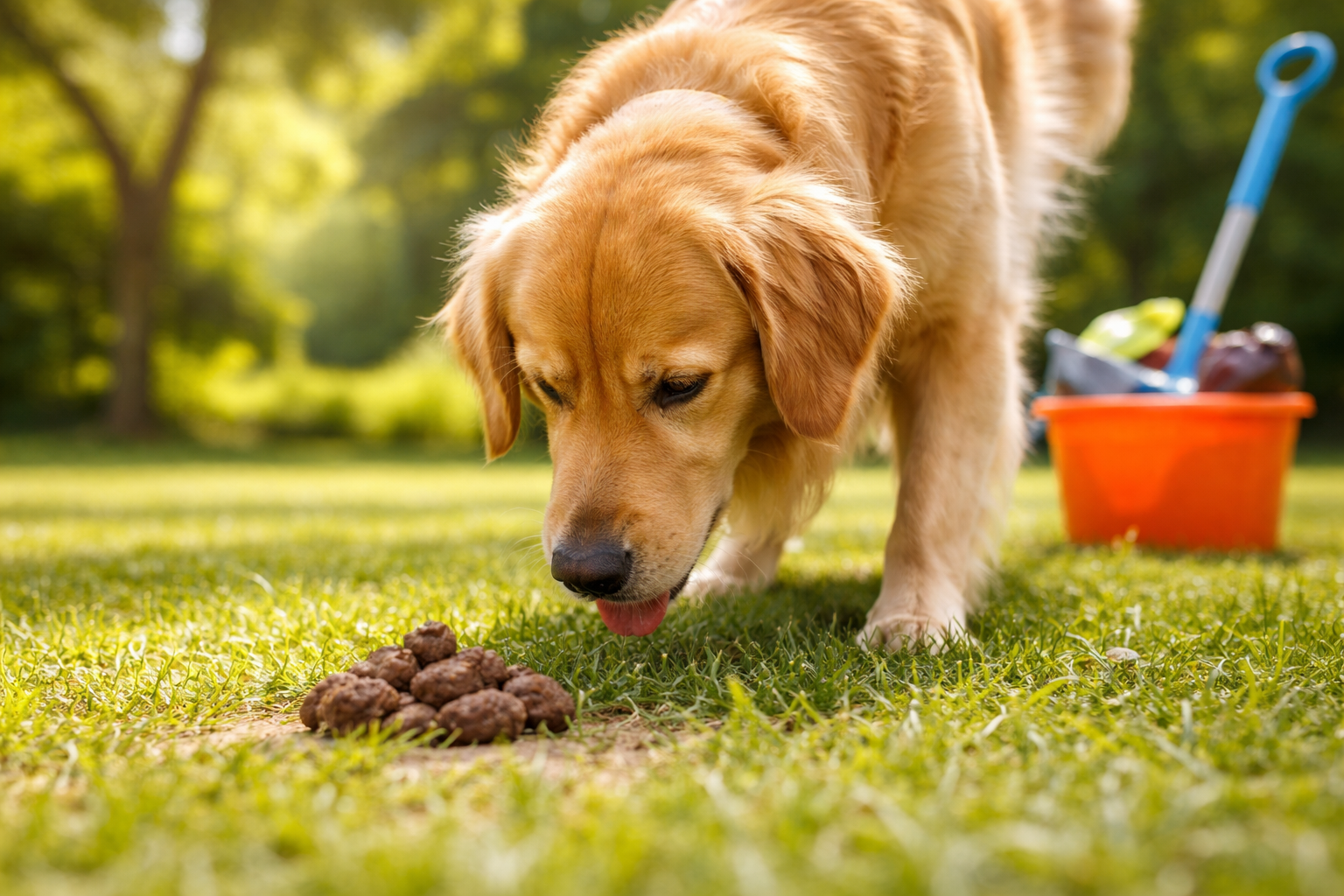
If you’ve ever caught your dog in the act, you’ve probably asked yourself: why is my dog eating poop? It’s gross, confusing, and honestly a little concerning.
The good news? This behavior called coprophagia is more common than you think. More importantly, it’s usually fixable once you understand the cause.
Let’s break it down clearly so you can stop it for good.
Quick Answer: Why Is My Dog Eating Poop?
Dogs eat poop for a few main reasons:
- Nutritional deficiencies
- Natural instincts from puppyhood
- Boredom or stress
- Attention-seeking behavior
- Poor yard hygiene (easy access to waste)
In most cases, it’s behavioral—not dangerous, but it should still be addressed quickly.
Common Reasons Why Dogs Eat Poop
1. Instinctual Behavior (Especially in Puppies)
Puppies often explore the world with their mouths. As a result, eating poop can simply be curiosity.
In addition, mother dogs naturally clean up after their puppies by consuming waste. Some dogs carry this instinct into adulthood.
2. Nutritional Deficiencies
If your dog isn’t absorbing nutrients properly, they may look for them elsewhere—even in feces.
For example:
- Low-quality food
- Digestive issues
- Enzyme deficiencies
Therefore, switching to a higher-quality diet can sometimes resolve the issue quickly.
3. Boredom or Lack of Stimulation
Dogs that are left alone in the yard too long may develop bad habits.
Eating poop can become:
- A way to pass time
- A form of self-entertainment
In addition, high-energy breeds are especially prone to this behavior when under-stimulated.
4. Stress or Anxiety
Dogs dealing with anxiety may turn to unusual behaviors.
Triggers can include:
- Changes in routine
- Moving homes
- Lack of attention
As a result, poop eating can become a coping mechanism.
5. Attention-Seeking Behavior
Believe it or not, your reaction might be reinforcing the problem.
If your dog notices that eating poop gets a big response, even a negative one—they may repeat it for attention.
6. Easy Access to Dog Waste
Sometimes the answer to why is my dog eating poop is simple: it’s available.
If waste isn’t picked up regularly, your dog has more opportunities to develop the habit.
Is It Dangerous for Dogs to Eat Poop?
In most cases, eating their own poop isn’t immediately harmful. However, there are risks:
- Parasites and bacteria
- Illness from other animals’ waste
- Bad breath and hygiene issues
Therefore, it’s best to stop the behavior as soon as possible.
How to Stop Your Dog From Eating Poop
1. Clean Your Yard Frequently
The fastest way to break the habit is to remove the temptation.
- Pick up waste daily
- Keep your yard clean and sanitary
- Eliminate access entirely
This is where a poop scooping service or dog waste removal service can make a big difference.
2. Improve Diet Quality
Upgrade your dog’s food to ensure proper nutrition.
Look for:
- High protein content
- Digestible ingredients
- Vet-recommended brands
In addition, consult your vet if you suspect digestive issues.
3. Increase Exercise and Mental Stimulation
A tired dog is a well-behaved dog.
Try:
- Daily walks
- Puzzle toys
- Training sessions
As a result, your dog is less likely to engage in unwanted behaviors.
4. Use Positive Reinforcement Training
Reward your dog for ignoring poop.
For example:
- Treats when they walk away
- Praise for good behavior
However, avoid punishment—it often makes the issue worse.
5. Try Deterrents
There are safe products that make stool taste unpleasant to dogs.
These can help break the habit when combined with proper cleanup.
How This Problem Impacts Dog Owners in New Jersey
If you live in areas like Toms River, Point Pleasant, Bric, or throughout Ocean County NJ, seasonal conditions can make this issue worse.
Winter: Snow can hide waste, making it easier for dogs to find later
Spring: Thawing reveals accumulated waste all at once
Rain: Can spread bacteria throughout your yard
As a result, consistent cleanup becomes even more important.
A professional cleanup service helps maintain a clean yard year-round, reducing both health risks and unwanted behaviors.
The Real Solution: Consistency
Stopping this behavior isn’t about one fix—it’s about consistency.
- Clean environment
- Proper nutrition
- Regular exercise
When all three are in place, the behavior usually fades quickly.